As humanity has evolved, we have gradually expanded our influence not only on Earth, but also in the universe. However, this progress has also led to new challenges. The universe, which for a long time was considered a limitless and clean environment, today faces the risk of pollution and irrational use. For this reason, the idea of «saving our space» has become important and relevant.
Рубрика: Անգլերեն
my favorite music
I don’t have any favorite preferences, but I can tell you about a very famous and beautiful song that many people love.The song Let It Be was released in 1970 and included on the album Let It Be.
It is considered one of the most popular and beloved songs of the band.The author and main performer of the song is Paul . He also wrote the lyrics. Other band members also participated in the creation of the song:
John Lennon, George Harrison and Ringo Starr.Paul said that the idea for the song came to him in a dream. When he was going through difficult times, he dreamed of his mother Mary, who told him, «So be it.» These words calmed her down, and she decided to write a song with this idea.
english
text
Once a sailor went ashore on the coast of South America. He had a number of blue woollen caps with him, which he wanted to sell. On his way to the town some distance from the coast, he had to pass through a forest in which there were great numbers of monkeys. At noon, with the sun directly overhead and the heat intense, the sailor decided to take a rest. He lay down under the shade of a large tree, took one of the caps, put it on his head, and soon fell asleep.
When he awoke, he found, to his surprise, that the caps were all gone! Soon he heard a loud noise among the thick branches above him, and he looked up. He saw the trees alive with monkeys, and on the head of each monkey was a blue woollen cap! The monkey had watched his actions, had stolen his caps while he slept and had put them on, and now they did not pay any attention to his shouts.
When the sailor saw that he could not get his caps back, he pulled off the one that he had on his head and threw it on the ground, crying out, “If you want to keep the rest, you may take this one too!” To his great surprise, the little animals did the same. Each took the cap off its head and threw it on the ground. The sailor got his caps back and went away in triumph.
1. There were a lot of monkeys.
a) at some distance from the forest
b) in the wood not very far from the coast
c) on the coast of South America
2. What did the sailor decide to do at noon?
a) to try on one of the woollen caps
b) to take off his cap as it was very hot
c) to lie down and rest
3. What did the sailor see when he woke up?
a) The monkeys were wearing his caps.
b) His companions had all gone.
c) There were a lot of birds singing in the trees.
4. Seeing that he could not take the caps back, the sailor
a) sat down and began to cry
b) thought that it was a funny sight and laughed heartily
c) thought that he could never have the caps back
5. What did the little monkeys do?
a) They repeated the sailor’s actions.
b) They were touched by the sailor’s tears and returned the caps.
c) They took the cap off the sailor’s head.
english
English
ex.3
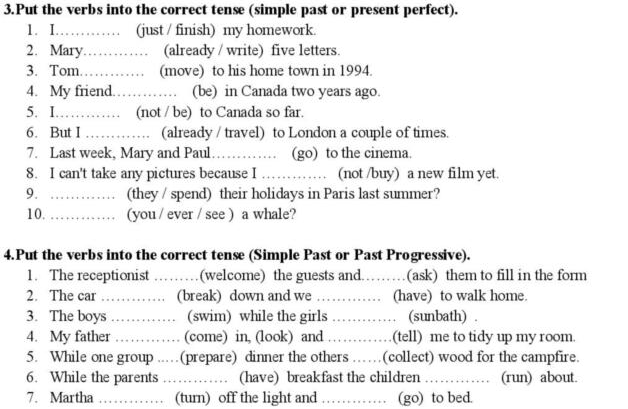
1.Ihave just finished my fomework
2.Mary have allredy written five leters
3.Tom moved to his home town in 1994
4.my friend was in Canada 2 years ago.
5.I haven`t beento canada so far.
6.but I have allready traveledto London a couple of times.
7.Last week Mary and Paul went to the cimnema.
8.I xcant take any pictures because I haven`t bought a new film yet.
9.They spent their holidays in Paris last summer.
10.have you ever seen a whall.
ENGLISH

1.woman
2.puppy
3.person
4.tooth
5.foot
6.watch
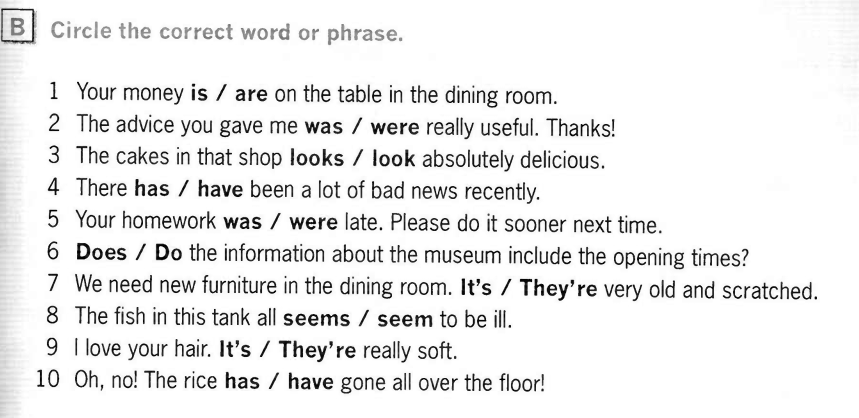
1.is
2.was
3.look
4.have
5.were
6.does
7.its
8.some
9.its

1.some
2.a pice of
3.a little
4.some
5.some
6.some
7.a little
8.some
english
1.
Read the text and answer the questions following it.
The Olympics have a very long history. They began in 776 BC and took place every four years for nearly 1200 years at Olympia, in Greece. The citizens of all the Greek states were invited to take part in the Games. The prizes were wreaths made of the branches of olive trees.
In 394 AD the games were stopped by the Roman Emperor Theodosius, and they weren’t held again until 1896. The games of 1896 were held at Athens and they were the first international Olympic Games. All the nations of the world were invited to send athletic teams.
From then and until the present time the Olympic Games have been international and the number of athletes taking part and the number of events on the programme have increased. In these games only amateurs or non-professional athletes can take part. Each country sends teams for as many of different events as possible. The winners of each event are given a certain number of points. The International Olympic Committee decides where each Olympics will take place. They ask a city (not a country) to be the host.
1. When did the Olympics begin?-They began in 776 BC and took place every four years for nearly 1200 years at Olympia, in Greece.
2. Who stopped the games in 394 AD?-In 394 AD the games were stopped by the Roman Emperor Theodosius, and they weren’t held again until 1896
3. Can non-professional athletes take part in the games?-In these games only amateurs or non-professional athletes can take part.
4. Who decides where each Olympics will take place?-Olympic Committee decides where each Olympics will take place. They ask a city (not a country) to be the host.
2. Write the verbs in the right tense form.
Thomas Isherwood arrived at Tindaro by the morning train. He was tall and thin. His eyes (1) was Blue and his face was brown (to be). He looked tired as he (2) didnt sleep Well in the train (not to sleep). He wore a grey overcoat and a blue and white scarf, and a brown hat.
No one (3) come To meet him, and he walked slowly along the platform carrying a brown leather suitcase (to come). He looked for a porter and gave him the luggage ticket.
He (4) dont know Italian, not a word of it (not to know). He was a typical Englishman just capable of asking “How much” – “give me the change”.
He said only on word to the porter – “Taxi”. His luggage (5) was put Into the taxi and then he himself got in (to be put).
3. Translate the sentences from Armenian into English.
1. Որքա՞ն հաճախ եք դուք հանդիպում ձեր ընկերների հետ։-How often do you meet white your freands:
2. Ես կարծում եմ, որ տնօրենը բաղը չի կարողանա ընդունել Ձեզ, քանի որ նա շատ զբաղված է լինելու։-tomorow I think that the headmaster cant aply you, becous he is very busy
3. Նրանք ասացին, որ ստիպվա են եղել թարգմանությունը կատարել բանավոր։-they ask me that they must translate do verbal։
4. Դուք կարող եք նրան տեղեկացնել, որ համերգը լինելու է վաղը երեկոյան։-You can let him know that the concert will be tomorrow evening.
5. Երբ Ջոնը զանգեց, ես արդեն ավարտել էի իմ դասերը։ when John call ,Ihave already finished my homeworks:
Educational camps in our school. Which camp do you prefer-summer or winter? Why? Tell about your favourite activity during the camps.
I like to the summer camps becouse in summer the weater is very suny and I think when the weather is suny the camps is very interesting and պլեասենտ
english
Assignments for 24.11.2025
Destination B1 Unit 11, Passive 2
NEF Student’s Book Changing your life
Reading. slide 27, It was just a holiday but it changed my life
english
Write something you learned about yourself recently.
I learned myself some English words and passive voice: I learned tenses, for example past perfect and future perfect in English: I learn to speak English very well and I learned some English grammer very well:
 Մանվել Դավթյան